Monday, March 18, 2013

UPDATE: 03/18/13

As a reminder, your response essays for Frank Giampietro's Begin Anywhere are due for tomorrow's class session.

On Wednesday, 20 March, please submit three questions to me via email for Frank's reading. Send these to me by noon.

For Thursday, 21 March, in addition to Frank's reading, you will need to bring a two-paragraph, single-spaced sketch of what you plan on writing about for your final research essay. You'll write a full proposal in earnest later in the semester, but this will give me some idea of where your interests lie.

I hope everyone had a terrific Spring Break. See you tomorrow.

Sunday, March 3, 2013

UPDATE: 03/03/13

For our class session on Tuesday, 05 March, please read the Russell Atkins poems on the Deep Cleveland page. Be prepared to discuss them in class.

As I mentioned in my email to you, I will be out of town at the annual AWP Conference in Boston, MA, so our class session on Thursday, 07 March will be canceled.

In preparation for our Research Proposal, though, we will discuss the assignment guidelines in Tuesday class session. The writing parameters can be found below:

RESEARCH PROPOSAL GUIDELINES

DUE: 11 April 2013 (tentative)
POINTS: 20 points

PURPOSE:

I designed the research proposal to orient you to your research focus by asking you to articulate a topic for investigation; it also introduces you to the genre of proposal writing and establishes the relationship between sophisticated use of sources and strong research writing. As Envision mentions in chapter four, the research proposal “provides a…formal structure for developing a project” and acts as a “means of organizing your thoughts in order to help you solidify your topic and move into the next stages of research” (113). The specific information found in a research proposal will be outlined for you in the “Content and Process” section below.

SUBJECT:

While the topic you select for this semester will be related to one of the concepts or collections or poets we studied this semester, the specific trajectory of your project is up to you. Ultimately, though, choose a topic that interests you or appeals to you in some way.

WHAT IS A RESEARCH PROPOSAL:

The foundation of research and writing is discovery, so you should not worry about whether or not you’re your proposal will address exactly what you end up writing about in your final research essay. But the proposal is a type of promise (to yourself and to your instructor) that will guide you through the research process and the development of a research-based argument. In all likelihood, as you conduct your research, your topic will modify in some way; this is perfectly acceptable and, in fact, normal.

A wide variety of disciplines and professions use proposals as a means of developing agendas for research communities, securing funding for studies, publicizing plans for inquiry and field research, and testing the interest of potential audience in a given project. Therefore, the genre, organization, and contents of the research proposal differ in many important ways from other kinds of popular and academic writing (which will be discussed in the “Content and Process” section). In the proposal, you need to explain your interest in your chosen subject and establish a set of questions to guide your inquiry. You also need to create a timeline for your research and writing process, as it is crucial to time management and helping to shape the scope and range of your research.

FORMAT AND LENGTH:

This assignment asks you to try out real-world standards for the length, format, and content of a research proposal, which will prepare you for future academic and professional projects. Your research proposal will be 4-5 pages in length outline your research ideas. The proposal should be double spaced, 12-point Times New Roman font, spell-checked and proofread. As this is both a formal project and a graded assignment, make sure that your proposal is more polished than a stream-of-consciousness free-write.

CONTENT AND PROCESS:

1. First, come up with an intriguing title for your research proposal that articulates a spirit of inquiry and engages your audience’s (i.e. your peers and professors) interest.

2. An introduction that clearly states and describes your topic, outlines your purpose, and identifies the conversation you’ve entered. You should develop a working thesis; this tentative statement will help you navigate sources more effectively and assist with time management and navigation of resources. But remember: be prepared to change your thesis as often as an honest interpretation of the data demands.

3. Provide background on your topic and what you know so far. Acknowledging how little you know can be an effective rhetorical move, for it demonstrates your need to conduct research. Of course, you should conduct preliminary research that you will incorporate and properly site in this section. Therefore, please integrate 1-2 reputable and relevant sources in your research proposal.

4. Identify a series of research questions that will inform your project and explain them in your proposal. While you, no doubt, will pose some general questions, make sure that you develop a series of specific and relevant (thus helpful) questions in order to guide and focus your next stage of research.

5. Determine and articulate the purpose or goal of this research: Why are you researching this particular topic? Why do you feel compelled to study this topic further? Whom do you hope to persuade? What is the significance of this work? This last aspect is the most crucial one, and it often makes or breaks the decision of a governing board, financial establishment, or other evaluative audience when judging various proposals of their merit, feasibility, and contribution to the field. You might decide to use this aspect for your conclusion.

6. Create a working bibliography that lists sources you’ve collected so far. Your working bibliography should conform to the documentation system (MLA) specified by your instructor, supervisor, or funding agency.

Sunday, February 24, 2013

UPDATE: 02/24/13

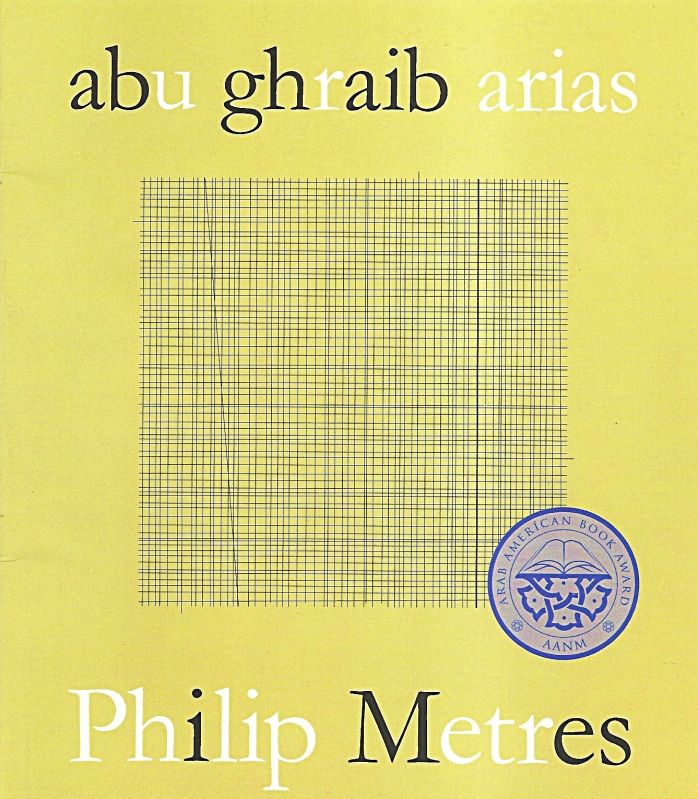
For our Tuesday, February 26 class session, please read Phil Metres’ chapbook abu ghraib arias (Flying Guillotine Press, 2012). While reading, think about how both the book and individual poems therein engage the concepts we’ve covered in James Longenbach’s The Resistance to Poetry. Make sure you’re annotating the poems and taking notes as you read.

After finishing the collection, you will need to write a response essay that addresses how Metres’ poems and Longenbach’s ideas relate to one another. Choose one concept from Longenbach and focus on how it manifests itself in abu ghraib arias. The choice of what concept you select is up to you, but make sure it’s one that appears with some frequency. I would suggest returning to Longenbach not just as a reference, but to examine how he engages, analyzes, and writes about poems on a formal level. When engaging a poem or poems from Metres’ collection, make sure to be explicit about how that concept operates in the excerpt you’ve selected.

Responses will be 2 full pages, double spaced, and typed in 12-point Times New Roman font with one inch margins. You should properly cite from both abu ghraib arias and The Resistance to Poetry, using MLA-format. All essays will be due at the beginning of our class session. No late assignments will be accepted.

For Wednessday, February 27 (the day after our Tuesday class session and before the reading during our Thursday session), you will need to send me an email that contains three questions for Metres based upon her book or our in-class discussions. Not only are writing these questions part of your grade, so is asking them after the reading.

Please email me if you have any questions. Also, please spread the word about Thursday’s reading and invite friends if you would like, as it is open to the public.

Saturday, February 16, 2013

UPDATE: 02/16/13

For our class session on 02/19/13, please look back over the Tyrone Williams poems I posted on the blog last week. I would also like you to read the Charles Gabel poems that appear in the most recent issue of the online journal alice blue review.

In addition to the above poems, please bring O Holy Insurgency to class with you. I'd like to discuss Thursday's reading and, perhaps, a little more of her book.

Finally, I would like to remind you that, if you have not already done so, please purchase a copy of Phil Metres's Abu Ghraib Arias immediately. You can only buy the book through Flying Guillotine Press's website. Also, I uploaded a few poems from Metres's chapbook Ode to Oil as a PDF file, which we will be reading as well.

Wednesday, February 13, 2013

UPDATE: 02/13/13

By 9PM tonight, please email me three questions for Mary Biddinger. As discussed in class, the questions should be broad enough that they allow Biddinger to expand/expound upon your inquiries; but they should also contain references to specific poems, lines, or concepts so as to offer her concrete examples of your line of questioning. Be prepared to ask her a question during the Question-and-Answer segment after the reading.

As a reminder, our class session, which will double as Biddinger's reading, will take place in the Guilford Hall Parlor.

Saturday, February 9, 2013

UPDATE: 02/09/13

For our Tuesday, February 12 class session, please read Mary Biddinger’s full-length collection of poems O Holy Insurgency (Black Lawrence Press, 2013). While reading, think about how both the book and individual poems therein engage the concepts we’ve covered in James Longenbach’s The Resistance to Poetry. Make sure you’re annotating the poems and taking notes as you read.

After finishing the collection, you will need to write a response essay that addresses how Biddinger’s poems and Longenbach’s ideas relate to one another. Choose one concept from Longenbach and focus on how it manifests itself in O Holy Insurgency. The choice of what concept you select is up to you, but make sure it’s one that appears with some frequency. I would suggest returning to Longenbach not just as a reference, but to examine how he engages, analyzes, and writes about poems on a formal level.

Responses will be 2 full pages, double spaced, and typed in 12-point Times New Roman font with one inch margins. You should properly cite from both O Holy Insurgency and The Resistance to Poetry, using MLA-format. All essays will be due at the beginning of our class session. No late assignments will be accepted.

For Wednessday, February 13 (the day after our Tuesday class session and before the reading during our Thursday session), you will need to send me an email that contains three questions for Biddinger based upon her book or our in-class discussions. Not only are writing these questions part of your grade, so is asking them after the reading.

Please email me if you have any questions. Also, please spread the word about Thursday’s reading and invite friends if you would like, as it is open to the poublic.

Wednesday, February 6, 2013

UPDATE: 02/06/13

For our class session on Thursday, February 06 we will discuss the poems I assigned from the previous session that we did not attended to on Tuesday. I would also like you to read the poems by Tyrone Williams at OmniVerse and Jacket. When reading these poems, think about how the engage concepts we read about in both the Longenbach book and the Gabbert article.